The Essential Guide to Baby Poop Colors and Stool Types


The color and texture of your baby’s stool can change over the first year. Let’s explore baby poop colors and consistencies—what’s typical and when you may want to talk to your pediatrician.
Baby Poop Chart
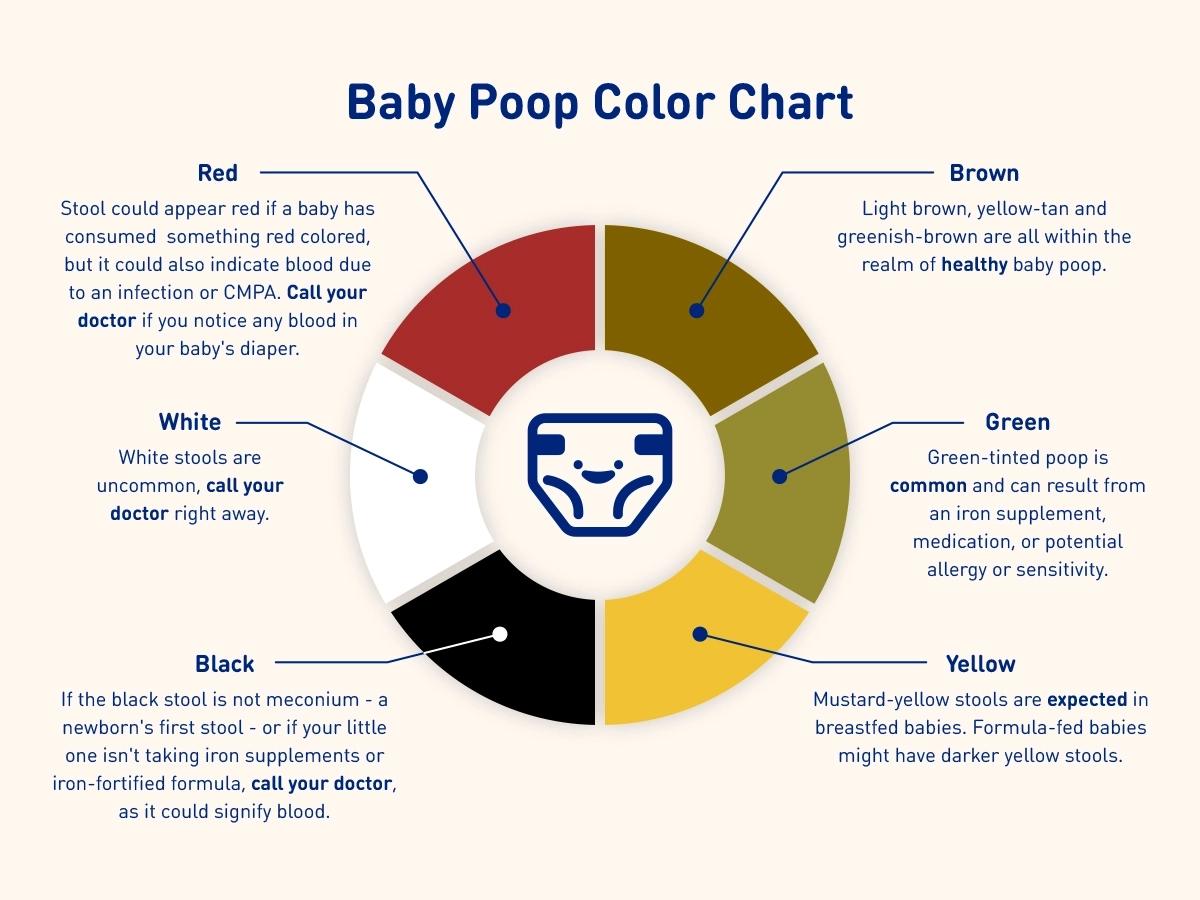
Color | Description | Why? | Normal? |
Yellow | Mustard-yellow stools are common in breastfed babies. | Breastfeeding | Likely normal |
Dark Yellow | Formula-fed babies may have darker yellow stools. Mustard-yellow stools are common in breastfed babies. | Formula feeding | Likely normal |
Brown | Poop in brown shades, including light brown, tan, yellow-tan, and greenish-brown, are all within the realm of healthy baby poop. | Breastfeeding or formula feeding | Likely normal |
Green | Green-tinted poop can result from an iron supplement or medication or indicate a potential allergy or sensitivity to something in the baby or mom’s diet. | Iron supplement, medication, allergy, sensitivity | Monitor and contact pediatrician if needed |
Red | Stool can appear red if a baby has consumed something red-colored, but it could also indicate blood due to an infection or cow's milk protein allergy. | Food, infection, allergy | Contact your pediatrician |
White | Pale, chalky white stools are uncommon and could indicate insufficient bile due to a liver issue. | Liver issue | Contact your pediatrician |
Dark brown, dark green, or black | Iron supplement or iron-fortified formula may be the culprit. If not, it could indicate blood. | Iron supplement, extensively hydrolyzed formula, blood | Contact your pediatrician |
Newborn Poop Chart
Type of Poop | Color | Consistency |
Meconium (first 24 hours) | Black-green or brown and tar-like | Sticky |
Breastfed | Mustard-yellow or green | Seedy and soft |
Formula-fed | Yellowish-brown, brown-green, or light brown | Soft, peanut-butter-like |
Starting Solids | Dark brown or various colors depending on diet | Firm |
Newborn Baby Poop Color and Consistency
Poop produced during the first 24 hours of a newborn’s life is called meconium and is made of fluid and cells that were ingested in-utero. Whether your baby is consuming breast milk or formula, meconium will be sticky black-green or brown tar-like. While it may look surprising, it’s normal for your little one to pass meconium and get it out of their system.
Breastfed Baby Stool Color and Consistency
The stools of breastfed infants look mustard-yellow and sometimes green. In terms of consistency, the poop will have seed-like particles. Breastfed infants typically have very soft, even watery stools, which may smell sweet.
Formula-Fed Baby Stool Color and Consistency
If you’re using infant formula, you can expect your baby’s stool consistency to be soft but more solidly formed than a breastfed baby’s. Colors may span anywhere from yellowish-brown and brown-green to light brown. The stools are usually larger and have a more pungent smell than breastfed baby poop.
Stool Types and Colors for Babies Starting Solid Foods
Bowel movements often become firmer, smellier, and dark brown once babies start eating solid food. However, be prepared for some seemingly odd colors to pop up as well. For example, the stool might look red after eating beets or have dark blue streaks after eating blueberries.
You may even spot some green poop from newly-introduced green foods, like spinach and peas. It’s also possible (and not uncommon) to find chunks of undigested food in your baby’s stool.
Baby Poop Colors
Let’s look at the palette of potential baby poop colors, from typical stool shades to those that may warrant a call to your pediatrician.
When to Call Your Pediatrician
There are some instances where it’s a good idea to double-check with your pediatrician. If you have concerns about your baby or the following, reach out to your baby’s doctor, as some stool colors and textures could indicate a potential health issue.
Stool Color/Texture | Potential Issue | Action to Take |
Black, tar-like | Blood in upper GI tract | Check with pediatrician immediately |
Red streaks/specks | Blood | Check with pediatrician immediately |
White | Bile not reaching stool | Check with pediatrician immediately |
Frothy green/dark green | Potential virus, cow's milk allergy, or food sensitivity | onitor and contact pediatrician if needed |
Watery/liquid | Diarrhea, could lead to dehydratio | Call pediatrician if lasts more than 24 hours or if baby is feverish, acting sick, under three months old, or showing indications of dehydration |
Hard, dark pellets | Constipation | Contact pediatrician if your baby seems to be irritable, in pain, or having any difficulty pooping |
Mucus | Infection, allergy, or other concern | Evaluate with doctor if accompanied by a lot of mucus, mucus in multiple bowel movements, or mucus accompanied by diarrhea |
Key Takeaways
- Baby poop varies in color and texture based on diet, age, and health.
- Normal colors include yellow, green, and brown.
- Red, black, or white poop may signal a health concern—contact your pediatrician. If your pediatrician determines your baby has a cow’s milk protein allergy, ask them about hypoallergenic formula milk.
- Tracking diaper changes helps you spot patterns and identify potential issues.
- When in doubt, reach out to a healthcare provider.
References
- Cleveland Clinic. The Color of Baby Poop and What It Means [Infographic]. Published April 27, 2023. Accessed May 29, 2025. https://health.clevelandclinic.org/the-color-of-baby-poop-and-what-it-means-infographic↗